
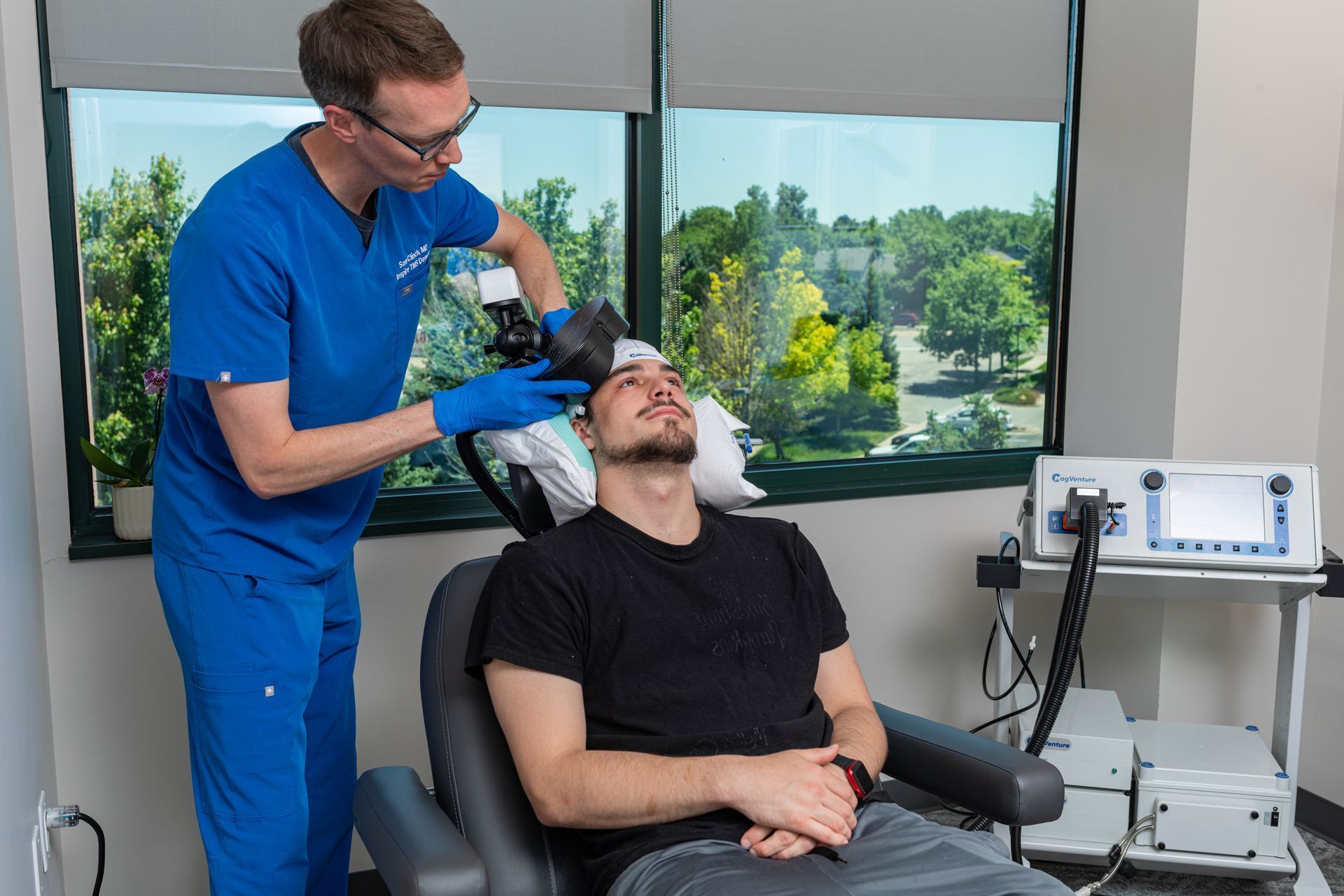


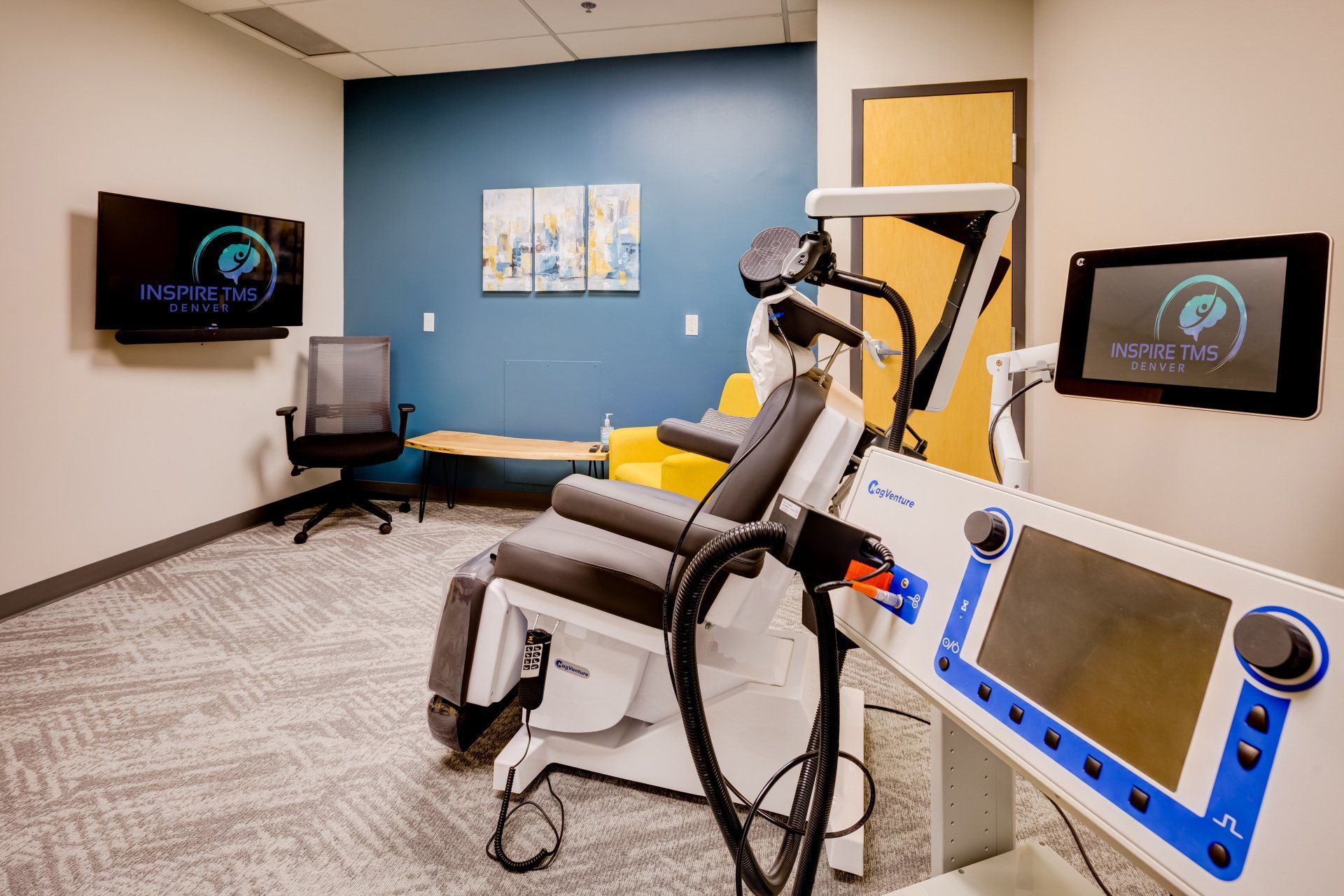
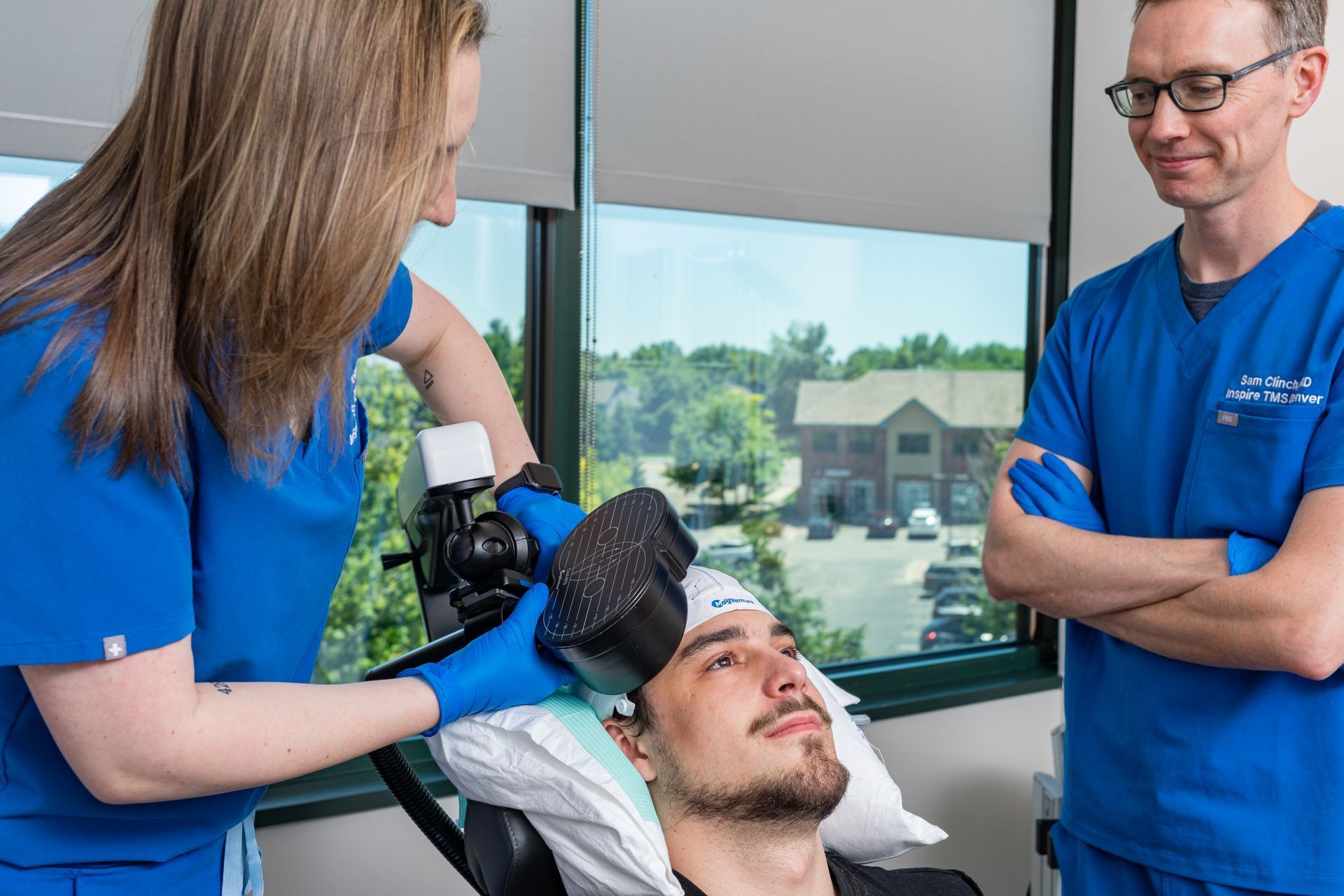
SAINT (Stanford Accelerated Intelligent Neuromodulation Therapy) is an FDA-cleared, accelerated form of TMS that uses brain imaging to personalize the treatment target and delivers about ten sessions a day over five days. ONE-D at Inspire TMS Denver is a single-day accelerated option - most of a full course condensed into one visit, physician-led, and available now in the Denver area. This post explains what SAINT is, how it works, and where ONE-D fits if you want fast results without traveling to a specialized SAINT center. If you've been researching faster ways to get through TMS, you've probably run into SAINT. It gets a lot of attention because it came out of Stanford and compresses weeks of treatment into a single week. It's a genuinely important development - and it's also not the only accelerated path. Here's a straight comparison so you can see what each option actually involves. What Is SAINT TMS? SAINT stands for Stanford Accelerated Intelligent Neuromodulation Therapy. It was developed by Dr. Nolan Williams and colleagues at Stanford University, and the system used to deliver it received FDA clearance in 2022. It's designed for adults with major depressive disorder who haven't responded well to antidepressant medication. What sets SAINT apart from standard TMS comes down to two things: it uses brain imaging to find each person's individual treatment target, and it delivers treatment in an intense, compressed schedule rather than one session a day over six weeks. How SAINT Works SAINT uses iTBS (intermittent theta burst stimulation) - a newer, faster form of magnetic stimulation that delivers each session in a few minutes rather than the longer sessions used in older protocols. The defining feature is imaging-guided targeting . Before treatment, you receive a functional MRI scan. That scan is used to pinpoint the exact spot in your dorsolateral prefrontal cortex - the region tied to depression - that's right for your brain. The precise location varies from person to person by a few millimeters, and the idea behind SAINT is that hitting your individual target, rather than a population average, improves accuracy. The treatment itself is intensive: roughly ten sessions per day, spaced throughout the day, across five consecutive days. The Stanford trials that supported FDA clearance reported high remission rates, which is why the protocol generated so much interest. There are two practical catches worth knowing. First, the imaging step adds cost and complexity. Second, the FDA-cleared version of SAINT runs on a specific system from one manufacturer and is only available at a limited number of clinics - so access often means traveling and waiting for availability. Insurance coverage is still developing and varies widely by plan. What Is ONE-D at Inspire TMS Denver? ONE-D is our single-day accelerated protocol. Instead of spreading treatment across weeks - or even across five days - ONE-D condenses a course of TMS into a single visit, with 20 sessions delivered across the day. Some patients split it across two days depending on their schedule and how they're tolerating the day. A few things define how we run it: Physician-led. Dr. Clinch oversees the mapping and monitors you through the day. This isn't a hands-off, technician-only setup. Delivered on our MagVenture targeted coils , the same equipment we use across our accelerated and standard treatment. Built for people who are short on time or traveling. If you're coming in from out of state or out of the Denver metro, doing it in one trip matters. It is a long, focused day - we're honest about that. But for the right person, getting through it in a single visit is exactly the appeal.
Quick Answer: Complex PTSD (C-PTSD) develops from prolonged, repeated trauma and adds a layer of symptoms - around emotional regulation, self-worth, and relationships - on top of classic PTSD. TMS is FDA-approved for depression and OCD and used off-label for PTSD; for C-PTSD specifically, the evidence is still emerging, and it works best alongside trauma-focused therapy rather than on its own. This post explains what makes C-PTSD different and what that means for treatment. If you've been told you have complex PTSD rather than PTSD, the distinction isn't just a label. It changes what recovery tends to involve - and it changes how a treatment like TMS fits in. Here's a clear-eyed look at what C-PTSD is, how it differs from PTSD, and where TMS can and can't help. What Is Complex PTSD (C-PTSD)? Complex PTSD comes from trauma that was prolonged or repeated, often over months or years, and frequently in situations a person couldn't easily escape - things like ongoing childhood abuse, domestic violence, or long-term neglect. That's different from the single-event trauma more often associated with PTSD, like a car accident or an assault. C-PTSD includes the core features of PTSD - re-experiencing the trauma, avoiding reminders of it, and a constant sense of threat or hypervigilance. On top of those, it adds three patterns that the repeated nature of the trauma tends to produce: Difficulty regulating emotions - feelings that come on fast and hard, or feeling emotionally shut down. A negative sense of self - persistent feelings of worthlessness, shame, or being permanently damaged. Difficulty in relationships - trouble feeling close to others, or pulling away from connection altogether. How C-PTSD Differs From PTSD The simplest way to hold the difference: PTSD is largely about what happened , while C-PTSD is also about what the trauma did to your sense of self and your relationships over time. PTSD often centers on a specific event and its aftermath. C-PTSD, shaped by trauma that was repeated and inescapable, tends to affect identity, emotional control, and the ability to trust and connect. The threat response is similar; the surrounding damage is broader. This matters for treatment because the broader symptoms don't resolve just by processing a single memory. They usually need a longer, more layered approach - which is the part people are often not told upfront. Can TMS Help With C-PTSD? Here's the honest version. TMS is FDA-approved for major depressive disorder and OCD. It's used off-label for PTSD, and for complex PTSD specifically, the research is still emerging - there isn't a large, dedicated evidence base the way there is for depression. Where TMS can be genuinely useful is in the overlap. C-PTSD very commonly travels with depression, and depression is exactly what TMS is approved and well-evidenced to treat . By easing the depressive weight - the low mood, the hopelessness, the inability to feel motivated - TMS can give people enough lift to engage with the trauma work that addresses the rest. What TMS is not: a standalone cure for C-PTSD, or a replacement for trauma-focused therapy. Anyone telling you otherwise is overselling it.
Quick Answer: TMS isn't FDA-approved specifically for social anxiety, and the evidence for treating it directly is still emerging - so it isn't a first-line option. Where TMS has a stronger, established role is in depression, which very often accompanies social anxiety; easing that can lift some of the weight. For social anxiety itself, therapy and medication remain the front-line treatments. This post explains what the evidence actually says and where TMS realistically fits. Social anxiety is one of the most common reasons people search for a way out that doesn't involve more medication or years of talk therapy. TMS comes up a lot in that search. It's a fair question to ask - so here's a straight answer about whether it works for social anxiety, where it genuinely helps, and where it's being oversold. What Is Social Anxiety Disorder? Social anxiety disorder (SAD) is an intense, persistent fear of being judged, scrutinized, or embarrassed in social or performance situations. It's not the same as being shy or introverted. For someone with SAD, ordinary interactions - speaking up in a meeting, eating in front of others, making a phone call - can trigger real dread, physical symptoms, and avoidance that narrows their life over time. It's also clinically distinct from generalized anxiety disorder (GAD) . GAD is broad, free-floating worry across many areas of life - money, health, work, family - that's hard to switch off. Social anxiety is specific: the fear centers on other people and the possibility of being negatively evaluated. That distinction matters, because treatments that help one don't automatically map onto the other. Is TMS Effective for Social Anxiety? Here's the honest version. TMS is FDA-approved for major depressive disorder and OCD. For anxiety disorders, including social anxiety, it's used off-label - meaning it's being applied outside its cleared indications. The research on treating social anxiety directly with TMS is early and limited. There isn't a robust, established evidence base the way there is for depression. So if you're asking whether TMS is a proven, first-line treatment for social anxiety, the answer is no. The front-line treatments for SAD remain therapy - particularly cognitive behavioral therapy and exposure-based approaches - and medication such as SSRIs. Any clinic presenting TMS as a standalone cure for social anxiety is getting ahead of the evidence. That doesn't mean TMS is irrelevant. It means its role is more specific than the headline question suggests. Where TMS Can Help: The Depression Overlap Social anxiety rarely travels alone. It very commonly co-occurs with depression - sometimes as a cause, sometimes as a consequence of years of avoidance and isolation. And depression is exactly what TMS is approved for and well-evidenced to treat. This is where TMS earns its place. By lifting the depressive symptoms - the low mood, the flatness, the loss of motivation - TMS can reduce the overall burden a person is carrying and create enough room to engage with the therapy that addresses the social anxiety itself. When anxiety and depression are tangled together, treating the depression often takes some pressure off the whole system. That's a more modest claim than "TMS treats social anxiety," and it's the accurate one.
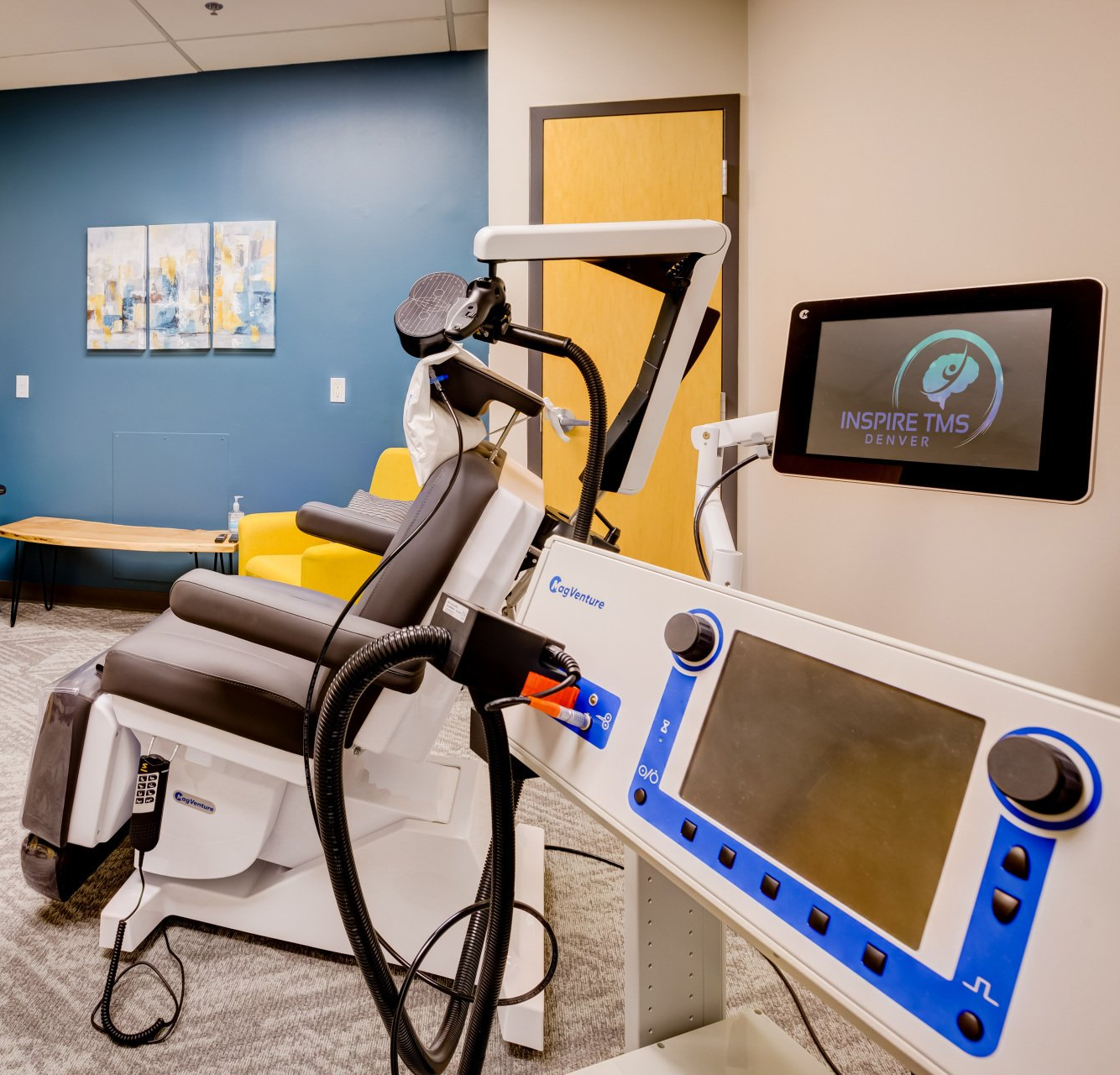
When you’re researching TMS clinics, you’ll see different brand names and device types - MagVenture , NeuroStar, “Deep TMS” (H-coil), and more. That variety can feel confusing, so here’s a plain-language explanation of what the differences mean for you and the smart questions to ask before you book. The short version Device choice mostly affects how stimulation is delivered , which influences: Which protocols a clinic can offer ( standard rTMS , iTBS/Theta Burst, accelerated/One-Day schedules). Session length ( iTBS sessions are very short; older rTMS sessions are longer ). Comfort & noise profile (coil shape and pulse characteristics feel different). Which brain targets are practical (some coils stimulate deeper or wider networks)? Administrative and insurance details (some devices have specific FDA indications or coverage histories). Importantly, good clinical outcomes depend more on clinician skill, mapping, and monitoring than on brand alone. Device capability matters - but physician-led mapping, correct dosing, and careful follow-up make the biggest difference. Device types explained (plain language) Conventional rTMS What it does: Delivers focused stimulation to a relatively small cortical area. Patient experience: Brief tapping sensation at the skull; sessions take longer than iTBS. Why clinics use it: Reliable for many standard depression protocols and widely available. iTBS (intermittent Theta-Burst Stimulation) capable devices What it does: Uses very short bursts of stimulation that produce similar biological effects as standard rTMS but in far less time. Patient experience: Sessions can be minutes long instead of 20–30+ minutes. Why it matters: Shorter appointments are often better for scheduling and comfort; many clinics combine iTBS with accelerated schedules. MagVenture (brand) What it is: A widely used manufacturer; some MagVenture systems are commonly used for accelerated/One-Day regimens. Why you’ll hear it: Clinics sometimes mention MagVenture when they offer compressed/accelerated protocols because of that device’s capabilities in certain settings. NeuroStar (brand) What it is: A long-standing, widely used TMS platform with established clinical workflows and FDA clearances for depression. Why you’ll hear it: NeuroStar has substantial real-world data and brand recognition. Deep TMS / H-coil (different coil geometry) What it does: Designed to stimulate broader or deeper brain regions than a figure-8 coil. Patient experience: Similar sensations but designed for different targets; used for certain FDA-cleared indications (i ncluding OCD in some systems ). Why it matters: May be an option when deeper networks are targeted, depending on diagnosis and evidence.
If you’ve chosen a ONE-Day (single-day) TMS course - about 20 short sessions delivered in one (or sometimes two) tightly scheduled days - it helps to know exactly how the day will flow. This patient-facing itinerary shows a typical hour-by-hour timeline, what the clinic does between sessions, what to pack, and simple tips to manage fatigue so your visit is as comfortable and effective as possible. You’ll arrive for a physician consult and motor-threshold mapping , then remain at the clinic for a block of short stimulation sessions with scheduled comfort breaks and outcome checks; the clinic monitors you closely and provides an end-of-day review and written summary. Sample hour-by-hour ONE-Day schedule (typical) 08:00 – 09:00 - Arrival, registration & physician consult Check in, confirm meds, and medical history. Short physician discussion about goals and safety. Clinic staff review consent and logistics. 09:00 – 10:00 - Motor-threshold mapping (30–60 min) Mapping identifies the stimulation intensity that produces a small motor response and documents coil coordinates. Staff records the exact coil position (so every session is reproducible). 10:00 – 12:30 - Treatment sessions (Block 1: Sessions 1–10) Multiple short stimulations (each session minutes long; setup/reset time between sessions). Comfort breaks every 2–3 sessions. Nursing/tech staff perform quick symptom checks during breaks. 12:30 – 13:30 - Lunch & outcome check A longer rest; the clinician may perform a short outcome measure (PHQ-9/GAD-7) or check vitals. Time to eat, rest, change clothes if desired, and call for support if needed (ride, family). 13:30 – 17:30 - Treatment sessions (Block 2: Sessions 11–20) Continue with scheduled short sessions and short comfort breaks. The team monitors tolerance, symptom scores, and comfort. If mapping or pacing adjustments are needed, the physician may make micro-changes. 17:30 – 18:00 - End-of-day review & discharge plan Clinician reviews outcome checks, documents the map and dose, and provides a written summary. The team discusses next steps: maintenance, boosters, and scheduling follow-up. Alternative: 1–2 day split - Many patients choose sessions 1–10 on Day 1 and 11–20 on Day 2 to reduce fatigue. The clinic will recommend this based on your history and tolerance. What the clinic does between sessions While you rest, the team is working clinically - not just waiting. Symptom & safety checks: Quick verbal checks, pain comfort ratings, and short outcome items as needed. Documentation: Techs log session parameters, coil coordinates, and any micro-adjustments. Titration µo-adjustments: If a patient reports discomfort or weak responses, the physician may test slight positional or intensity changes. Outcome monitoring: We compare brief score snapshots to baseline to spot early plateau and decide if remapping or pacing changes are required. Support & comfort: Staff provide water, snacks, and a quiet place to rest. They also address anxiety , nausea, or headache immediately.
Cost is often the first practical question people ask about One-Day (20-session) and other accelerated TMS options. At Inspire TMS Denver, we treat price transparency as part of clinical care: patients need clear, itemized information to choose the safest, most realistic plan. This guide explains how we build estimates, what coverage looks like for accelerated care, and the payment and financing options we make available. How we build a clear, itemized estimate We prepare estimates the same way we prepare clinical plans - methodically and transparently. An itemized One-Day or accelerated estimate typically lists: Physician consult & safety review (initial consult + med review) Motor-threshold mapping (the clinical calibration before treatment) Treatment sessions (number of sessions, e.g., 20 for a One-Day plan) Monitoring & outcome tracking (score collection, nursing/tech time) Post-treatment follow-up (clinical review, summaries, maintenance planning) Administrative fees (benefits checks, prior authorization support) Any optional items (travel planning support, printed clinician summaries, extra clinician time) We run a benefits check first so the itemized estimate reflects what your insurer will cover and what your likely out-of-pocket responsibility will be. The result is a one-page, line-item document you can use to compare options, plan travel, or request approval from a third party (employer, caregiver, etc.). Typical cost examples & context Costs vary by protocol ( iTBS vs. standard rTMS vs. One-Day) and local pricing. Historically, clinics have published example One-Day packages as a single bundled price; Inspire’s prior examples of accelerated offerings have been in the mid-range of market pricing (clinic examples published previously showed accelerated options around $7,000 versus higher-priced comparators). These are illustrative - we always produce a current, personalized itemized estimate after the benefits check, so you know what applies to your plan. Insurance & coverage realities for accelerated care Standard coverage: Most insurers that cover TMS cover standard, daily courses for treatment-resistant depression when medical criteria are met and prior authorization has been secured. Accelerated/One-Day nuance: True One- Day 20-session packages are often self-pay because many policies don’t yet recognize compressed, single-day regimens as a standard benefit. However, some insurers - and Medicare in certain situations - do cover modified accelerated patterns (for example, two sessions per day) when clinically justified. We run benefits checks to determine exactly how your plan treats accelerated options. Prior authorization & documentation: When coverage is possible, we submit clinical summaries, prior treatment history, and outcome measures to support authorization. Our team helps with appeals if the initial decision is denied. Learn More: Pricing
The period following completion of an i nitial TMS course is critical . At Inspire TMS Denver , we think of the first 90 days as the window when early gains are consolidated, problems are caught early, and long-term plans (maintenance or boosters) are agreed upon. This practical roadmap explains what clinicians monitor, when a booster or maintenance plan is recommended, and what patients can do to protect and extend benefit. Why the first 90 days matter TMS causes brain-level changes that unfold over weeks . Some people improve quickly and continue to get better; others show delayed responses or need a small clinical adjustment to translate early signals into durable benefit. The first 90 days are when clinicians can: Detect early response vs plateau Make targeted adjustments (remap, pacing, or protocol change) Decide whether boosters or a maintenance schedule will help sustain gains. A proactive, measured approach during this window reduces the chance that patients drift away from care when benefit is still within reach. What clinicians routinely measure and why At Inspire, we rely on objective signals plus clinical judgment. The core things we track are: 1. Standard outcome scores (weekly → monthly) PHQ-9 for depression , GAD-7 for anxiety , and other condition-specific scales. These reveal numeric trends that often precede clear subjective change. We typically collect baseline scores, then repeat them weekly (early weeks), moving to biweekly/monthly checks as things stabilize. 2. Functional markers Sleep, work/school performance, social engagement, and daily activities are measured via short checklists. Function often improves alongside symptom scores - sometimes even earlier. 3. Safety & tolerability Headache, scalp discomfort, fatigue, and any neuro symptoms. Persistent or new neurological issues trigger urgent review. 4. Medication, sleep, and life events Changes in meds, poor sleep, or acute stress/medical events strongly affect response and are always reviewed. 5. Treatment adherence & session data Missed sessions, pacing changes, or protocol deviations are tracked because they affect outcomes.
If you live in Boulder or the nearby Front Range and are considering TMS , Inspire TMS Denver in Broomfield is an easy, physician-led option for local care and short-trip accelerated plans. Below you’ll find practical local details - approximate drive times, One-Day logistics, hotel & travel tips, and how to get a no-surprise, itemized estimate for your visit. Why Boulder residents come to Inspire TMS Denver Physician-led care: Dr. Samuel Clinch personally oversees mapping and accelerated One-Day courses. Precision mapping: We perform motor-threshold mapping before any accelerated plan so dose and coil position are individualized. One-Day capability: For patients who need fast delivery of the full course, we offer physician-supervised One-Day (20 sessions in 1–2 days) and other accelerated protocols. Outcome tracking & follow-up: We monitor PHQ-9/GAD-7 scores and make data-driven adjustments (remap, pacing, boosters) so your trip produces measurable results.
Mapping is the clinical step that makes TMS precise. At Inspire TMS Denver, we use motor-threshold mapping to find the coil position and stimulation intensity that reliably affect the brain area we intend to treat. But mapping is not a one-and-done ritual - sometimes a fresh map is the right next step. Remapping is a normal, evidence-based part of precision care: it helps the team fine-tune treatment so sessions are safer, more reproducible, and more likely to work. Below is a clear explanation of why we remap, the remapping process, what patients experience, and real examples of how small changes can produce meaningful clinical gains. Why remap? The clinical reasons We commonly consider remapping after a careful review when any of the following apply: Early plateau or slow progress. If outcome scores (PHQ-9, GAD-7, or other scales) stop improving by the expected window (often around week 3), remapping helps determine whether coil position or intensity is limiting response. Prior TMS elsewhere. If you had TMS with a different device or clinic, anatomical and equipment differences can mean that a new, clinic-specific map improves reproducibility. Medication or medical changes. New medications, dose changes, or medical events that affect cortical excitability can change how your brain responds to stimulation. Change of protocol. Moving from standard rTMS to an accelerated plan, One-Day course, or iTBS may warrant a fresh map to ensure safe and effective dosing. Persistent discomfort or side effects. If you have repeated intolerable scalp discomfort or side effects that suggest coil angle/placement could be optimized, remapping is a logical fix. Equipment or technician change. Different coils or small technique differences can alter the effective stimulation; remapping restores precision. Importantly: remapping is not an admission of failure . It’s a targeted diagnostic step - think of it like recalibrating a medical device to match your brain’s current physiology. What happens during a remap? Comfort: You may feel brief tapping and small muscle twitches during mapping; discomfort is usually minimal. Adjustment period: If we change your dose or target, we monitor closely for comfort and early response. Timeline to effect: A beneficial remap sometimes produces earlier improvement in the following weeks, but improvements still unfold over days to weeks. Documentation: You’ll receive an updated map summary that you can share with other providers.
If you completed a One-Day (single-day) TMS course at Inspire - roughly 20 short sessions delivered in one (or two) tightly scheduled days - you’ve taken a fast, physician-supervised step toward change. This week-by-week roadmap explains typical recovery, the symptom signals we watch for, and exactly when to contact the clinic so you get the support you need. Quick reminder - What Happened That Day Your One-Day visit began with a physician consult and motor-threshold mapping , so dose and coil position were tailored to your brain. The day was paced with comfort breaks and outcome checks; you left with an end-of-day summary and follow-up plan. That mapping and documentation allow us to make data-driven decisions after you go home. Week 0 - The Day of Treatment (Immediate Recovery) Expect: Mild scalp soreness or tapping at the coil site, possible brief headache or fatigue by evening. Tips: Rest as needed, hydrate, and eat a normal meal. Avoid alcohol for 24 hours. Arrange a ride home if you feel tired. Call if: Severe symptoms (worsening headache, confusion, fainting). Week 1 - First Signals Expect: Some people notice early changes in sleep, anxiety, or mood; others notice little yet - both are normal. Mild side effects usually resolve. Clinic check: We compare your Week 1 outcome score to your baseline to assess early improvement. Call if: Side effects persist or you feel markedly worse. Read About: Pros & Cons Week 2 - Emerging Pattern Expect: Many patients begin to report clearer improvements (more energy, better sleep, less worry); responses vary. Clinic check: We repeat measures (e.g., PHQ-9) and review meds or sleep if improvement is limited. Call if: You’re concerned you’re not improving, or side effects interfere with daily life.