


TMS Pricing Guide

We believe effective depression treatment should be accessible. Here’s what you need to know about cost and coverage.

In 30 Seconds

TMS is FDA-approved and covered by most major insurance plans.

We offer sliding scale pricing for self-pay patients.

Third-party financing options are available if needed.

Our cost estimator makes it easy to see what you might pay - no surprises.

Covered by Insurance

  • Most major insurers cover TMS for depression, including Aetna, Cigna, Anthem/BlueCross BlueShield, Medicare, Kaiser, and UnitedHealthcare.


  • Our team handles verification and pre-authorization.


  • We’ll walk you through coverage and any out-of-pocket costs before starting.

Self-Pay / Sliding Scale Pricing

If paying out of pocket, we offer sliding scale rates based on income to keep care accessible.

Gross Family Income Accelerated TMS - 50 sessions in 1 week Standard TMS Course (pre-paid option) Standard TMS Course (pay as you go) Maintenance TMS
Over $300,000 $12,000 $10,500 $11,950 $200
$250,000-$300,000 $11,000 $9,500 $10,755 $180
$200,000-$250,000 $10,000 $8,500 $9,560 $160
$150,000-$200,000 $9,000 $7,500 $8,365 $140
$100,000-$150,000 $8,000 $6,500 $7,170 $120
Under $100,000 $7,000 $5,500 $5,975 $100

Ask about custom options if your income falls outside these brackets.

Accelerated TMS Cost

For those looking for faster results, we offer Accelerated TMS:


Flat rate: $7,000


Includes:


  • Initial evaluation
  • 50 sessions delivered over 5 days
  • All follow-up visits
  • Free touch-up treatments within 6 months (if needed)


Financing

We provide access to third-party financing options (including plans with interest-free periods for qualified applicants).

Our team can guide you through the process and help you apply.

Frequently Asked Questions

Is TMS covered by insurance?

Yes - most major insurance plans cover TMS for depression, including Medicare, Aetna, Cigna, Kaiser, Anthem, and UnitedHealthcare. We handle verification and pre-authorization so you know your costs up front.

What if I don’t have insurance?

How much does TMS cost out of pocket?

Is Accelerated TMS covered by insurance?

Can I finance my TMS treatment?

When will I know what I’ll pay?

Not Sure Where to Start?

Take a quick quiz to get answers about your care options, coverage, and costs - in under 2 minutes.

Is TMS Right for Me?

Find out if TMS is a good fit for your symptoms and treatment history.

Quick 9-question screening

No pressure, no commitment

Personalized feedback

Talk to a Doctor

 Free 10–15 Min Call

Find out if TMS is a good fit for your symptoms and treatment history.

Eligibility & treatment info

Insurance & cost guidance

Personalized care advice

Our shared inspiration is to alleviate mental illness and improve the mental wellbeing of the patients we treat. We respect all backgrounds and cultures and want to hear our patient’s stories to best guide care. During treatment, we reinforce positive wellness practices, help maximize lifestyle modifications, and integrate rTMS therapy into a patient’s overall mental and physical health treatment.


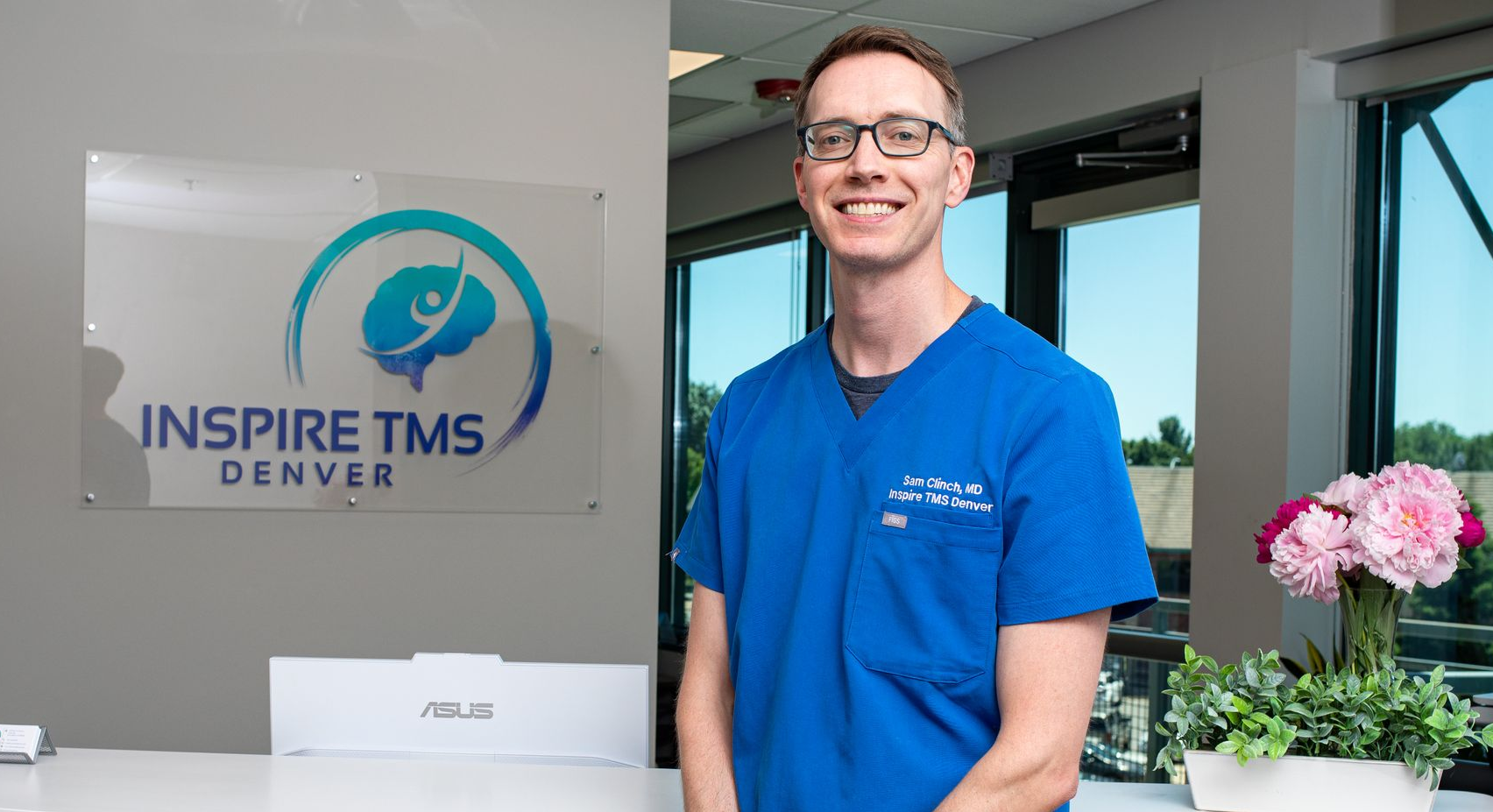
Samuel B. Clinch, M.D


Medical Director

Us vs Them

What sets Inspire TMS apart from typical TMS providers


Inspire TMS Denver

Sliding Scale Pricing Available

5-day Accelerated TMS Protocol

10–15 min call with Doctor

Focused Exclusively on TMS

>80% Clinic Response Rate

Cost Estimator Tool

15,000+ Treatments Completed


Other Clinics

Fixed Pricing Only

Often Unavailable

Long Wait or Intake Staff Only

Larger Multi-Service Clinics

Unpublished or National Data

No estimator or Guidance

Unknown Volume

Hear What Our Patients are Saying

40+ Five Star Reviews on TMS Therapy In Denver, Colorado

TMS Learning Center

Featured Resources

By Sam Clinch December 12, 2025
What Inspire TMS Denver accepts and what that means In-network / insurer relationships: Inspire states it accepts major commercial insurers and works with patients to obtain coverage - including Medicare and Tricare, where criteria are met - and the clinic routinely runs benefits checks and prior authorizations on a patient’s behalf. That means you don’t need to guess whether a policy will pay - Inspire will verify for you. Common Medicare / commercial rules (examples): Different payers have specific clinical criteria. For example (from the clinic’s pricing documents): Anthem - typically requires failure of two different antidepressants from different classes (or intolerance). Medicare -may require failure of one previous antidepressant (or intolerance) Tricare - covers TMS when it is medically necessary and prior less-intensive interventions have failed or are inappropriate. These examples illustrate typical insurer frameworks, but your plan may differ. What’s often covered vs not covered: Commonly covered: FDA-cleared TMS for treatment-resistant major depressive disorder when prior treatment criteria are met and prior authorization is approved. Often not covered (or considered “off-label”): accelerated TMS protocols , certain indications (some anxiety/insomnia/experimental uses), and some PTSD/anxiety uses; these may require self-pay or sliding-scale payment. Inspire notes it offers sliding-scale/self-pay for off-label care and for financial hardship.
By Sam Clinch December 12, 2025
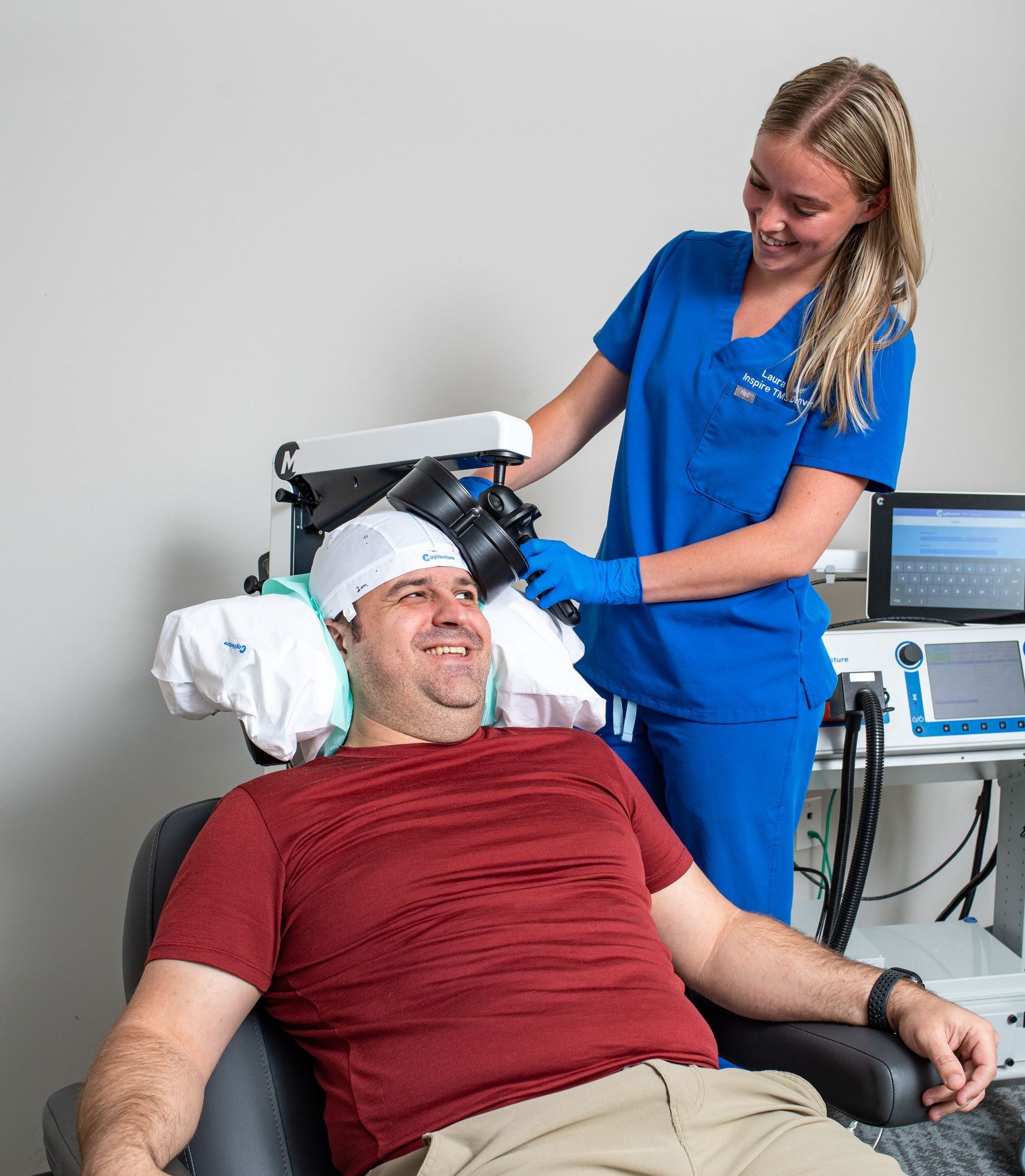
How TMS is different: a quick, plain-language explanation TMS uses a magnetic coil to stimulate specific areas of the brain associated with mood and emotional control. It’s non-invasive, does not require anesthesia, and is performed in an outpatient setting. Instead of changing chemistry like antidepressants or providing a rapid but medication-based reset like ketamine , TMS aims to retrain brain circuits by repeatedly activating under-performing regions so they function more normally over time. Inspire’s patient materials stress this neuroplastic, circuit-based approach and describe mapping, stimulation and physician oversight used to personalize treatment.
By Sam Clinch December 11, 2025
What is “treatment-resistant depression” (TRD)? Clinically, TRD is commonly defined as depression that has not sufficiently responded to an adequate trial of two different antidepressants (from at least two different classes) given at therapeutic doses and durations. Some insurers and clinical guidelines use this “two-trial” rule when deciding whether to cover advanced treatments like TMS. Medicare and commercial payers may have slightly different wording (for example, Medicare sometimes requires one failed antidepressant; Anthem often requires two). The key idea is consistent: TRD means standard medication strategies haven’t produced an acceptable response.
By Sam Clinch December 10, 2025
Your main options while you’re in Colorado Short/accelerated courses If you have very limited time, accelerated TMS (iTBS or compressed protocols) lets clinics deliver many sessions over a few days rather than weeks. Inspire offers accelerated regimens (MagVenture-capable) and lists accelerated TMS as an option for patients who need a fast course, but note: accelerated courses are often not covered by insurance and usually require self-pay or sliding-scale arrangements. Maintenance or “rescue” sessions Maintenance or “rescue” sessions If you’ve completed a full course and need occasional boosters to maintain gains while away, maintenance TMS (weekly, biweekly, or monthly sessions) is common. Clinics also provide rescue or extension courses when symptoms re-emerge. Maintenance often requires a clinician discussion to set frequency, and many insurers do not routinely cover maintenance so clinics may offer packages or discounted session bundles. Full course continuation If your original acute course was interrupted, many clinics will pick up or adjust your plan; this typically requires review of previous mapping and progress measures and coordination with your home TMS provider. Inspire performs mapping and tailors plans to each patient’s needs.
Soldiers in uniform seated in a circle; one person comforts another, all in a support group setting.
By Sam Clinch December 9, 2025
Short answer: Yes — Transcranial Magnetic Stimulation (TMS) is increasingly used to treat PTSD symptoms, and many patients report improvements in intrusive memories (flashbacks), hypervigilance and reactivity. At Inspire TMS Denver we tailor TMS protocols to each person’s needs and monitor results closely, offering standard and advanced TMS options for trauma-related symptoms.
Woman in blue scrubs smiles in front of an
By Sam Clinch December 9, 2025
Who is this page for? If you’re searching “ TMS therapy near me ” because medications or therapy haven’t worked, this guide walks you through what TMS is, the types of TMS offered at Inspire TMS Denver, who qualifies, what a typical course looks like, cost & insurance realities, and real patient experiences so you can decide whether to book a free consultation. Inspire is a doctor-led clinic that specializes in evidence-based TMS and personalized care.

Why Choose Inspire TMS Denver

We combine clinical expertise with a personalized, patient-first approach. From board-certified care and flexible pricing to proven treatment outcomes, we’re here to help you find lasting relief - with support every step of the way.

Affordability Made Simple

Insurance, Financing & Sliding Scale Options

Board-Certified Psychiatrist

Over 10 Years of Clinical Experience

Fast-Track TMS Option

5-Day Protocol for Faster Relief

Proven Patient Outcomes

Success Rates Tracked In-Clinic

Free Doctor Consultation

No Obligation, 10–15 Minute Intro Call

Personalized Care Plans

Tailored TMS Treatment for Every Patient

Your Free Consultation

Call us at 720-446-8675 or complete the form below.

Contact Us

What Happens After I Send My Message?

A white check mark in a green circle.

A team member will confirm your free consultation within one business day

A white check mark in a green circle.

We’ll help you explore if TMS is right for you

A white check mark in a green circle.

You’ll get answers to your questions about treatment, eligibility, and cost