


Bipolar Depression Test

info • July 31, 2023

Online Bipolar Depression Test 


If you have concerns or identify with many of the symptoms, it is important to book an appointment with your primary care doctor or a mental health provider. In the meantime, this test is not a diagnostic tool, but a high score may indicate a chance for Bipolar. As this article demonstrates, Bipolar is a common mental health disorder. There are treatments available to successfully manage symptoms of Bipolar, including TMS therapy . Take the quiz below to see if Bipolar might be present for you.

Do you experience chronic or long-term episodes of depression separated by periods of extreme excitement and euphoria? Are these extreme changes in mood affecting your life and preventing you from achieving a balanced lifestyle with work, home, and relationships? Do you feel alone and frightened about why you are like this? 
The crucial message is that you are not alone. 
The World Health Organization confirmed that 40 million people (about twice the population of New York) were diagnosed with bipolar disorder in 2019 and that number has increased significantly since the pandemic. Roughly 2.8 percent of all U.S. adults ( https://www.nimh.nih.gov/health/statistics/bipolar-disorder ) have had bipolar disorder in the past year. The reality is that Bipolar Disorder is a common, everyday condition that millions of people are living with every day.
The reality is that Bipolar Disorder is a common, everyday condition that millions of people are living with every day. 

What Is Bipolar Disorder? 


The prefix ‘bi’ is used to signify two, e.g. ‘bicycle or bilingual’. Hence ‘bipolar’ refers to two ‘poles’ of emotional energy and their extreme opposites. Bipolar disorder is a condition that involves episodes of clinical depression, with sadness, despair, and apathy, punctuated with alternate periods of huge elation, animation, and excitement. This acute happiness phase is also known as ‘mania’ and Bipolar Disorder was previously known as Manic Depressive Disorder . As with most conditions, there is a broad spectrum of Bipolar from mild to more extreme episodes of depression and mania. Suicidal thoughts and behaviors are unfortunately quite common in Bipolar Disorder. (In the event of any medical emergency including suicidal ideation call 911 immediately).
The good news is that conventional treatments are also significantly effective in managing the condition and subsequently improving outcomes, whilst newer, innovative therapies such as TMS (Transcranial Magnetic Stimulation) are providing very promising results.

Symptoms of Bipolar Disorder


Bipolar disorder is categorized by the severity of low (depressive) and high (mania) symptoms. The severity of the manic episodes that occur dictates how Bipolar is categorized. Some of the different types are as follows:

Bipolar I 


A minimum of 1 manic episode is required for Bipolar I diagnosis. The episode must last 7 or more days (and may need hospital care). A person with Bipolar I disorder may or may not have associated Major Depressive episodes.
Episodes of mania entail elevated, expansive, or irritable mood and at least several of:
  • Inflated self esteem or grandiosity
  • Decreased need for sleep
  • Increased talkativeness or rapid speech
  • Distractibility or concentration problems
  • Risk-taking behaviors or pleasure seeking behaviors
  • Increase in goal directed behavior
  • Can present with psychotic features
  • Some inidividuals can suffer from a depressive episode same time or at another time

Bipolar II 


A major depressive episode lasting at least 2 weeks and at least 1 hypomanic episode occurring historically. Depressive symptoms tend to be more prevalent for Bipolar II and can be misdiagnosed as Unipolar Major Depression.
Episodes of hypomania – less intense than a full manic episode, but similar symptoms and shorter in duration (at least 4 days)

Cyclothymic Disorder


  • Milder form of Bipolar Disorder presenting with emotional fluctuations but less severe symptoms than Bipolar I or II Disorder.
  • Frequent mild hypomania and frequent mild depressive symptoms.

Other specified/unspecified bipolar and related disorders


Displaying similarities to Bipolar but may not fit into classic patterns such as;
  • Rapid cycling bipolar
  • Bipolar with mixed features
  • Bipolar with seasonal pattern
  • Unspecified bipolar

Mania Depression 

So, what do these symptoms look like?

Mania - A manic episode is incredibly intense and is not dissimilar to a drug ‘high’ with feelings of invincibility or inflated self-confidence, fast and constant chatter, and sleeplessness. Racing thoughts, a compelling need to create or start projects with an urgent need to do everything NOW. Paradoxically unable to concentrate but obsesses over tasks and most worryingly, sexual, financial, or socially risk-taking behaviors. Manic episodes prevent participation in everyday life having consequential impacts on employment, relationships, and well-being. Risk-taking behaviors increase the detrimental effects. It is important to note that any other cause such as substance abuse or another health condition would not classify as a manic episode.
Hypomania - Hypomania is much less intense than a manic episode but severe enough that changes to your behavior are very noticeable and unsettling to people around you. Again, if it is triggered by substance abuse, it is not diagnosed as hypomania.
Depression - Bipolar depression reflects the same symptoms as Major Depressive Disorder including protracted periods of melancholy including apathy about activities and people that brought joy. Fatigue, low tolerance levels, lack of concentration, and changes to eating and sleeping habits are also signs of depression and suicidal ideation. (In the event of any medical emergency including suicidal ideation call 911 immediately).

Causes of Bipolar Disorder

The brain is a new and largely unexplored frontier in medical exploration and truly little is known about its functions. But far more is known today, and that knowledge is increasing all the time. Bipolar disorder is strongly indicated as hereditary, passed on generationally in families and gene research is ongoing. Trauma, substance abuse, and severe stress could also be triggers as they are in many other mental health disorders, or it could be a chemical imbalance in the brain. Research has not yet discovered a definitive answer, but the frontier becomes closer every day.

Diagnosis of Bipolar Disorder

If you are concerned that you are identifying symptoms of bipolar I or bipolar II, start by discussing your worries with your general practitioner who will refer you to a Mental Health Specialist if he feels it is appropriate. A medical professional with a Mental Health specialism will make a diagnosis and will include a thorough review of your medical history and your symptoms. The American Psychiatric Association’s Diagnostic and Statistical Manual of Mental Disorders (DSM-5) provides medical professionals with a diagnostic tool for bipolar disorder and its category, defining the conditions of mania and depression. A blood test and physical examination will also be performed to rule out any other potential causes or conditions. It is advisable to bring a close friend or family member to a consultation for both support and to provide another perception of your symptoms.
Check out our article on TMS for Bipolar Depression →

Pregnant woman preparing a salad in a bright kitchen by the window
By Sam Clinch • October 30, 2026
Depression during pregnancy is common and serious, and for mothers who want to avoid exposing their baby to medication, TMS is worth knowing about. It's a no...

Assorted medicine blister packs with pills on a newspaper-covered surface
By Sam Clinch • October 30, 2026
If you've tried two or more antidepressants without lasting relief, you're not out of options, you've reached the point where it's worth looking beyond anoth...

Two people in a bright office meeting, one taking notes while the other speaks on a sofa.
By Sam Clinch • October 30, 2026
Anxious depression is depression that comes with significant anxiety, the racing mind, the restlessness, the dread, on top of the low mood. It's common, it t...
Woman in blue scrubs standing in front of an Inspire TMS Denver sign.
By Sam Clinch • September 17, 2026
Stopped antidepressants because of the side effects? TMS avoids the systemic effects, weight gain, low libido, numbness, that make medication hard to tolerate.
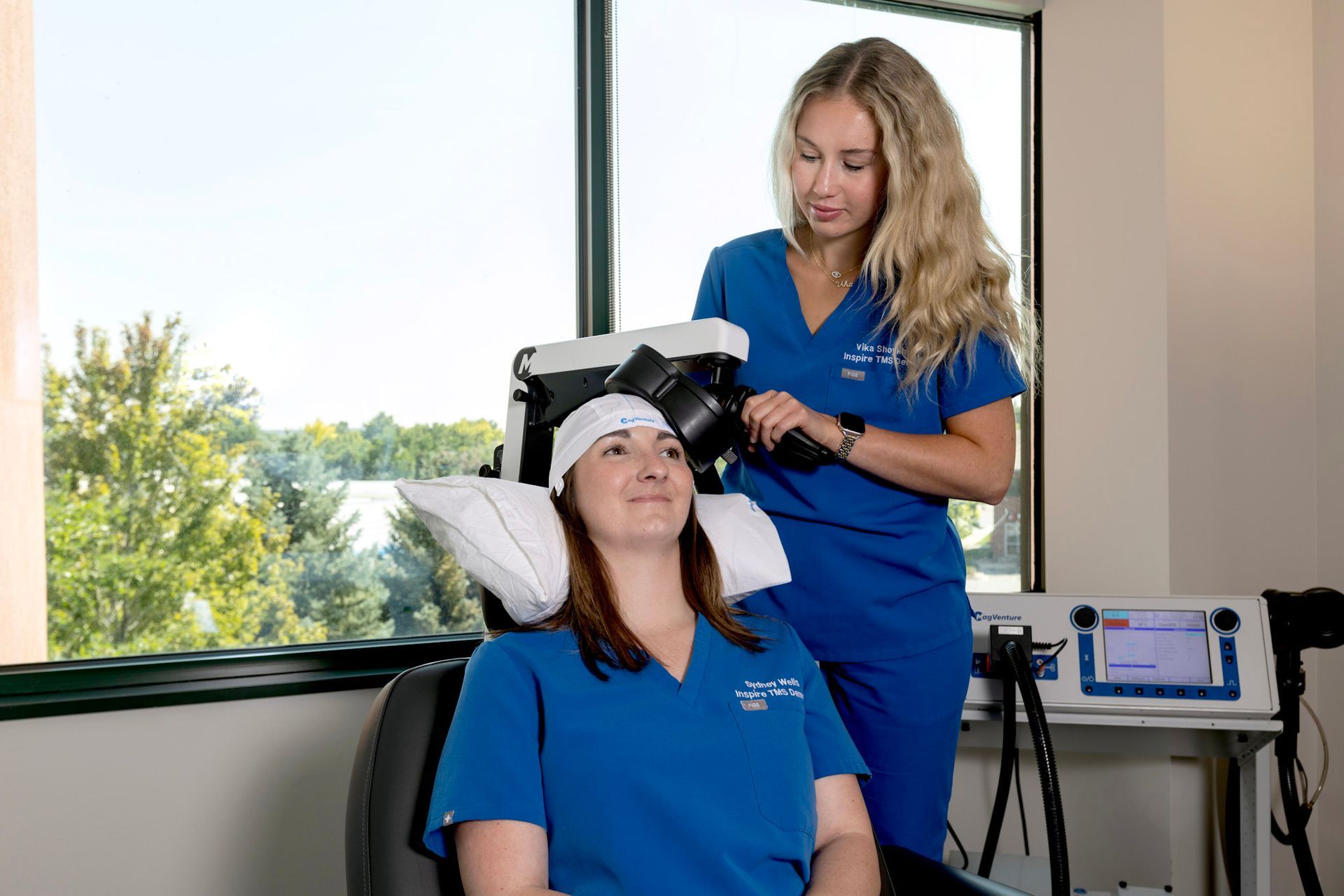
Clinician adjusting a head-mounted device on a seated patient in a bright medical office
By Sam Clinch • September 17, 2026
Tried two or more antidepressants without relief? TMS is FDA-cleared for exactly that. An honest look at how it works when medication hasn't, and who it's for.

Five healthcare staff in blue scrubs standing together in a clinic hallway, smiling at the camera
By Sam Clinch • September 15, 2026
Does TMS cause weight gain? No. It's weight-neutral, unlike many antidepressants. Here's the honest reason why, and what any weight change during treatment means.
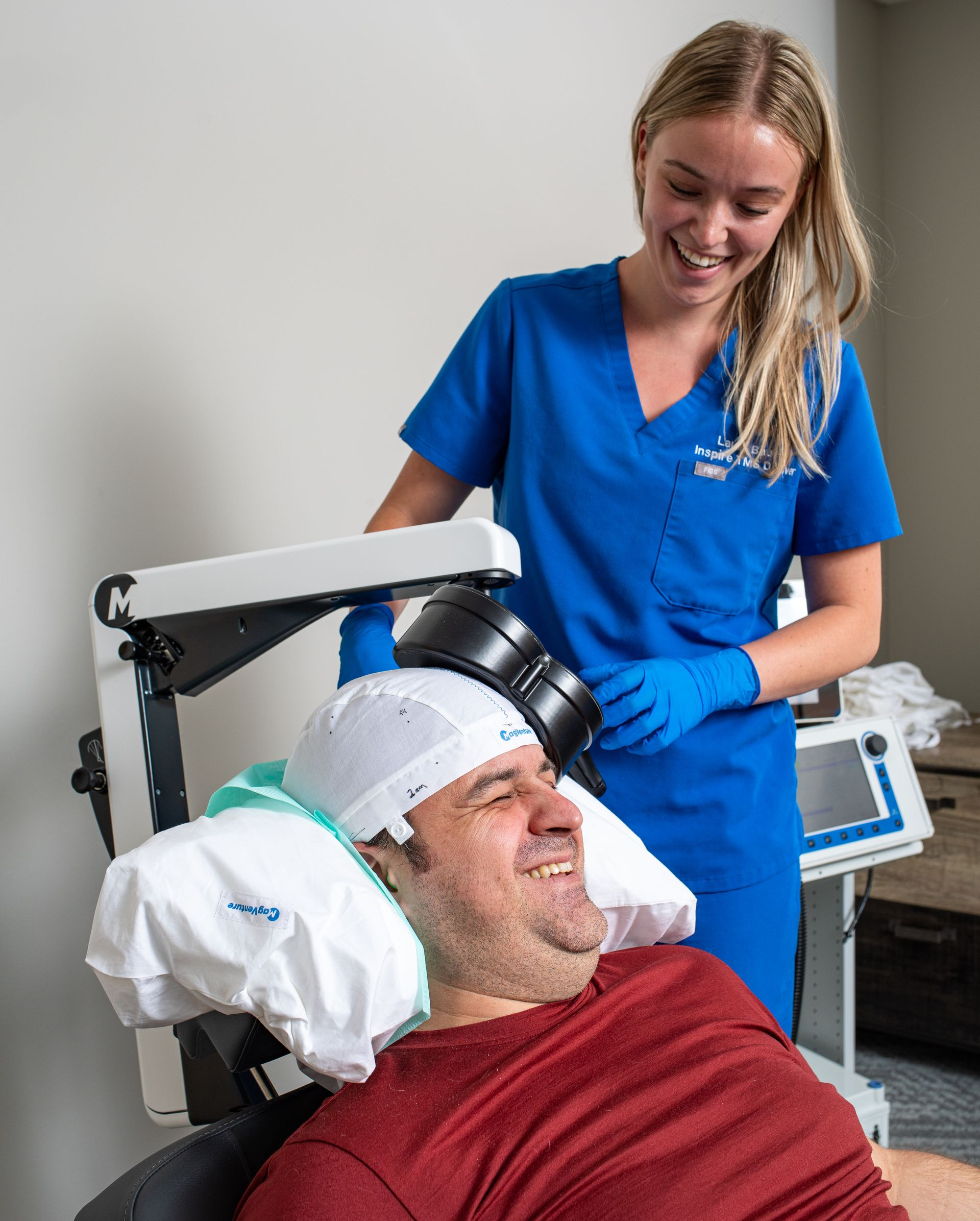
Clinician in blue scrubs adjusts a scalp treatment device on a smiling patient in a clinic chair
By Sam Clinch • September 15, 2026
Does TMS affect memory? No, it's not linked to lasting memory loss, and it isn't ECT. Here's the honest picture, including why your focus may actually improve.

Four healthcare staff in blue scrubs standing together in a clinic hallway, smiling at the camera.
By Sam Clinch • September 15, 2026
Is TMS safe? A straight look at the real side effects, the rare serious risks, and the truth behind "TMS ruined my life" stories, so you can decide clearly.

By Sam Clinch • August 25, 2026
Quick Answer: Yes. TriCare covers TMS for adults with major depressive disorder on an outpatient basis. TriCare is accepted at Inspire TMS Denver, and your benefits are checked before treatment begins so you know your costs up front. TMS is FDA-cleared for depression, and if antidepressants have not worked, it may be a covered next step. Depression is common in the military community, and it often travels alongside the other things service members and their families carry, including PTSD and anxiety. If medication has not brought the relief you were hoping for, TMS is worth understanding, and for TriCare beneficiaries it is a covered option. What Is TMS Therapy? TMS (transcranial magnetic stimulation) is a non-invasive, FDA-cleared treatment for depression. It uses targeted magnetic pulses to stimulate the areas of the brain involved in mood regulation. There is no anesthesia and no sedation. Most people drive themselves to and from sessions and go straight back to their day. It is usually considered when antidepressant medications have not provided enough relief, which is also the point at which TriCare coverage becomes relevant. Does TriCare Cover TMS? Yes, for major depressive disorder . TriCare covers TMS as an outpatient treatment for adults with major depressive disorder. TriCare is accepted at Inspire TMS Denver. Coverage still depends on your specific plan and on the documentation your provider submits, so it is not something to guess at. Rather than have you work it out alone, the clinic verifies your benefits before treatment begins and gives you an estimate of any out-of-pocket cost, so there are no surprises once you start. PTSD, Depression, and What TriCare Actually Covers This is the part worth being straight about, because it affects whether your treatment gets approved. TMS is FDA-cleared and TriCare-covered for major depressive disorder. It is not covered as a standalone treatment for PTSD. A lot of people in the military community come in thinking of PTSD as the main issue, and depression is very often part of that same picture. Where major depressive disorder is present and documented, that is the diagnosis that opens the door to TMS coverage. You do not need to untangle this yourself. During your evaluation, the clinical team determines the correct primary diagnosis and handles the paperwork that goes to TriCare. What helps most is being open about your full history, including your mood, your medication trials, and what has and has not worked. Who Does TriCare Cover? TriCare serves active duty service members, activated National Guard and Reserve members, military retirees, and their families. If you are a veteran who separated without retiring, your coverage may run through the VA rather than TriCare, which is a different pathway. If you are not sure which applies to you, the screening call is the fastest way to find out where you stand.
Dental clinician examining a seated patient in a bright clinic with panoramic windows.
By Sam Clinch • August 12, 2026
Quick Answer: As of August 2025, TMS is FDA-cleared for adolescents aged 15 to 21 with major depressive disorder, as an add-on (adjunct) to antidepressant medication for teens who haven't responded adequately to medication alone. It's non-invasive, drug-free, and done without sedation. It is not a replacement for medication or therapy, and at our clinic, a teen must have an existing psychiatrist and therapist to begin. This post explains what the clearance actually covers, what treatment involves, and how to tell if it's worth exploring for your child. If your teenager has been struggling with depression and medication hasn't been enough, you've probably reached the point of asking what else exists. TMS is now a real, FDA-cleared option for adolescents, but there's a lot of loose language online about what it is and who it's for. Here's the accurate version, written for parents who want the facts without the hype. Is TMS FDA-Cleared for Teenagers? Yes, with specific limits worth understanding. In August 2025, the FDA cleared the MagVenture TMS system , the equipment we use, as an adjunct treatment for major depressive disorder in adolescent patients aged 15 to 21. (Other manufacturers received similar adolescent clearances around the same period.) Two details matter here, because a lot of websites blur them: It's FDA-cleared, not "FDA-approved." Those are different regulatory pathways, and cleared is the correct term for TMS devices. The clearance covers ages 15 to 21, not an open-ended "15 and up." There's a defined upper bound. We're precise about this because when the topic is treating a minor, the details are the whole point. What "Adjunct" Actually Means This is the part most worth understanding. The FDA cleared TMS for adolescents as an adjunct, which means an add-on used alongside antidepressant medication, for teens who have not responded adequately to that medication on its own. It is not cleared as a replacement for medication, and the evidence in adolescents is strongest when TMS is added to an existing antidepressant rather than used by itself. So the honest framing is this: TMS is a way to boost the effect of treatment your teen is already on when that treatment hasn't been enough, not a way to take them off their medication. Any clinic suggesting TMS can simply replace a teenager's antidepressant is getting ahead of what the science and the clearance actually support. How TMS Works and What Treatment Involves TMS uses targeted magnetic pulses to stimulate a region of the brain involved in mood regulation, the left dorsolateral prefrontal cortex. It's non-invasive: nothing enters the body, there's no sedation or anesthetic, and your teen is fully awake throughout. Practically, for your child that means: Short daily sessions. Treatment sessions run about 18.5 minutes, with patients typically in and out of the office within half an hour. A weekday schedule. A standard course runs daily on weekdays over about six weeks, followed by a short taper of two to three weeks. No downtime. Because there's no sedation, teens can return to school and normal activities immediately after each session. Generally mild side effects. When they occur, side effects are usually localized: some scalp discomfort at the treatment site during the pulses, which typically stops as soon as the session ends, and occasional headaches that usually respond to over-the-counter pain relief. Often there are no side effects at all. TMS does not involve the sedation or systemic medication effects that come with some other treatments, and it is not associated with effects on memory or concentration. Why Consider TMS for a Teen? Adolescence is a period when depression often appears for the first time, and standard treatments don't always work. Some teens don't respond to the medications they try; others struggle with side effects or find it hard to stay on medication consistently. When that's the situation, a non-drug option that adds to their existing care can be genuinely valuable. That's the role TMS plays here: another tool for teens whose depression hasn't lifted enough with medication and therapy alone, not a first move and not a standalone fix.
Show More