


Sliding scale pricing for self-pay patients
Talk to the Doctor
Free 10 Minute Consultation
Free Doctor Call
10–15 Minutes
Free Doctor Call →
10–15 Minutes
Free Doctor Call →
10–15 Minutes
Talk to the Doctor
10–15 Minutes
Pros and Cons of TMS Therapy
Understanding what makes TMS effective - and what to expect.
In
30
Seconds

TMS is FDA-approved, non-invasive, and medication-free.
It’s highly effective for treatment-resistant depression, with minimal side effects.
Like any treatment, it’s not instant - and doesn’t work for everyone.
The Pros of TMS Therapy
Non-Invasive and Medication-Free
TMS requires no anesthesia or sedation, and you stay awake during treatment. There are no systemic side effects like weight gain, GI issues, or sexual dysfunction - common with antidepressants.
Proven Effectiveness
TMS has 70–80% response rates and up to 50% remission in treatment-resistant depression. It’s FDA-approved for:
- Major Depressive Disorder
- OCD
- Smoking cessation (certain devices)
Minimal Side Effects
- Most common: mild headache or scalp sensitivity, especially during the first few sessions.
- No memory loss (unlike ECT). No long-term physical effects.
Covered by Insurance
Medicare and most commercial insurers cover TMS for depression once standard criteria are met.
Quick Return to Daily Life
You can drive yourself home after treatment, return to work, and continue normal activities.
Works When Meds Don’t
Many of our patients have tried multiple medications without success. TMS offers a different approach - by directly stimulating underactive brain regions involved in mood.
This is paragraph text. Click it or hit the Manage Text button to change the font, color, size, format, and more. To set up site-wide paragraph and title styles, go to Site Theme.
The Cons of TMS Therapy
Time Commitment
A typical course is 36 sessions over 6–8 weeks, with 5 sessions per week. Each session lasts 3–18.5 minutes, depending on protocol.
Gradual Results
It can take 2–6 weeks to notice improvement. Some patients respond quickly; others need more time or adjustment to their protocol.
May Not Work for Everyone
While success rates are strong, not all patients respond. Your treatment plan should include a full psychiatric evaluation to assess fit.
Upfront Cost (Without Insurance)
While many patients are covered, self-pay plans can cost $5,500–$11,500. Inspire TMS Denver offers sliding scale pricing and financing options to make care accessible.
Not a One-Time Fix
For some patients, maintenance sessions or a follow-up course may be needed, especially for chronic or recurrent depression.
Detailed look at TMS side effects
Scalp discomfort
A prickling or tapping sensation where the coil sits on the head. Stops when the session ends. Most patients become desensitised within a few sessions.
Facial twitching
The magnetic pulses can briefly stimulate nearby facial nerves. Painless, and stops with the session.
Headaches
The most common reportable side effect. Usually mild and responds to standard over-the-counter pain relief. Your technician can adjust coil intensity if they develop.
Seizures (extremely rare)
Seizures during TMS are very rare and almost always occur in patients with prior seizure history or where stimulation has exceeded safety guidelines. Every patient is screened before treatment, and sessions are monitored throughout.
Manic switches in bipolar patients (rare)
TMS can trigger mania in patients with bipolar disorder, including undiagnosed bipolar. Screening before treatment is designed to identify this risk.
Hearing protection
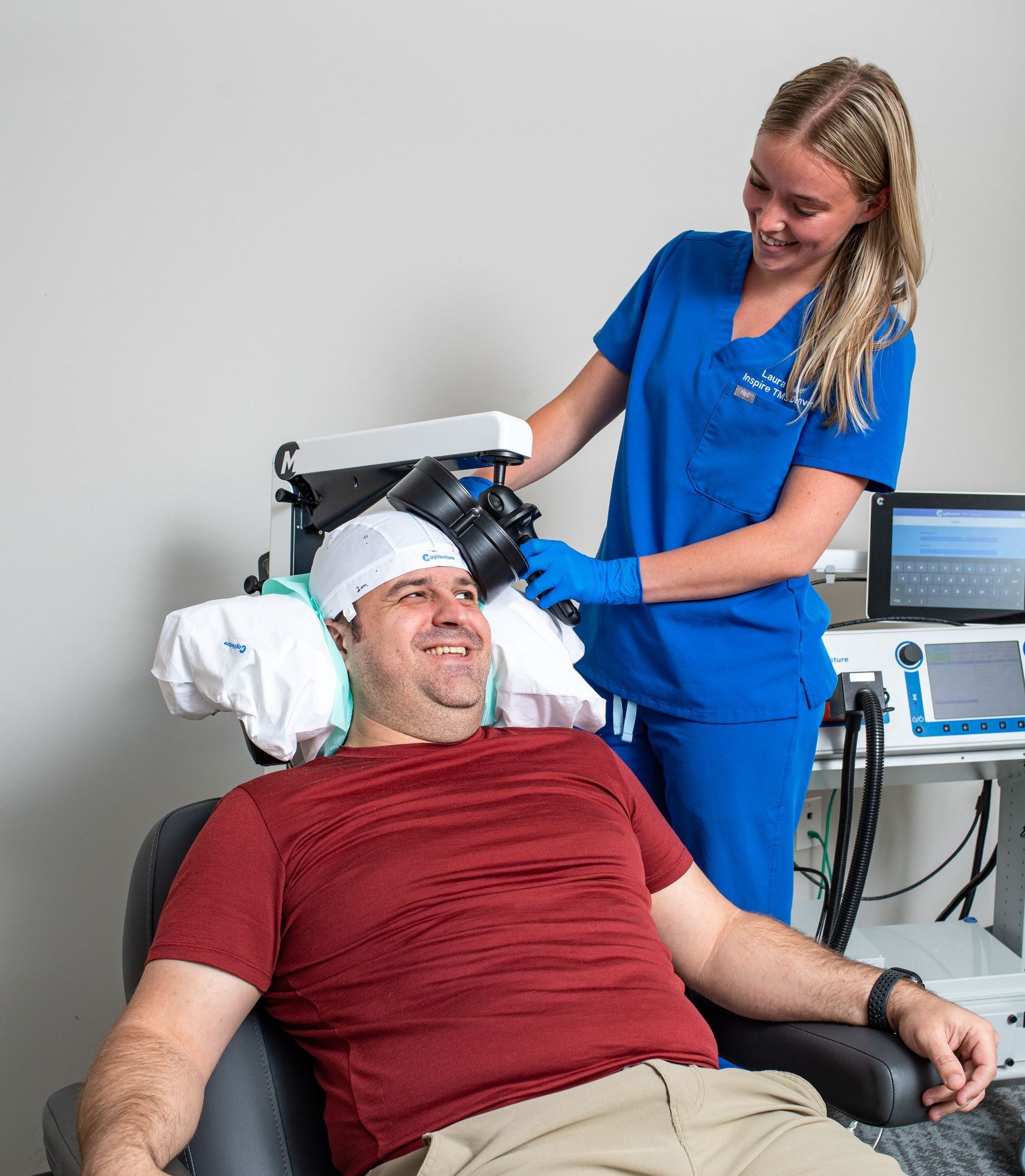
TMS produces a loud clicking sound during stimulation. All patients wear earplugs during sessions to prevent any risk of hearing damage from prolonged noise exposure.
Contraindications
Some conditions affect whether TMS is safe for you - history of seizures, significant brain injury, or magnetically-conductive implants above the neck. Full disclosure of medical history at the consultation is essential.
Common Myths About TMS Set Straight
Myth: TMS causes memory loss
No adverse effects on cognition have been identified in TMS studies. Some research has actually shown slight cognitive improvements. The confusion comes from ECT (electroconvulsive therapy), a separate treatment that can affect memory - TMS does not.
Myth: TMS causes brain damage
No brain damage has ever been identified from TMS using evidence-based protocols. TMS is actively being researched as a tool to help recovery after brain injury, dementia, and stroke.
Myth: TMS is an electrical shock treatment
TMS is often confused with ECT, but they're different treatments. ECT delivers electrical current under anaesthesia in a hospital to trigger a controlled seizure — used for severe, treatment-resistant cases. TMS uses focused magnetic waves (similar in principle to an MRI), no electricity enters the body, no anaesthesia, delivered in an outpatient setting, and patients drive themselves home afterward.
Myth: TMS is expensive and insurance won't cover it
TMS is FDA-cleared for treatment-resistant major depression and is covered by most major insurers. Out-of-pocket costs depend on your specific plan and are calculated before treatment begins. We also offer sliding-scale pricing and third-party financing for self-pay patients.
The Bottom Line
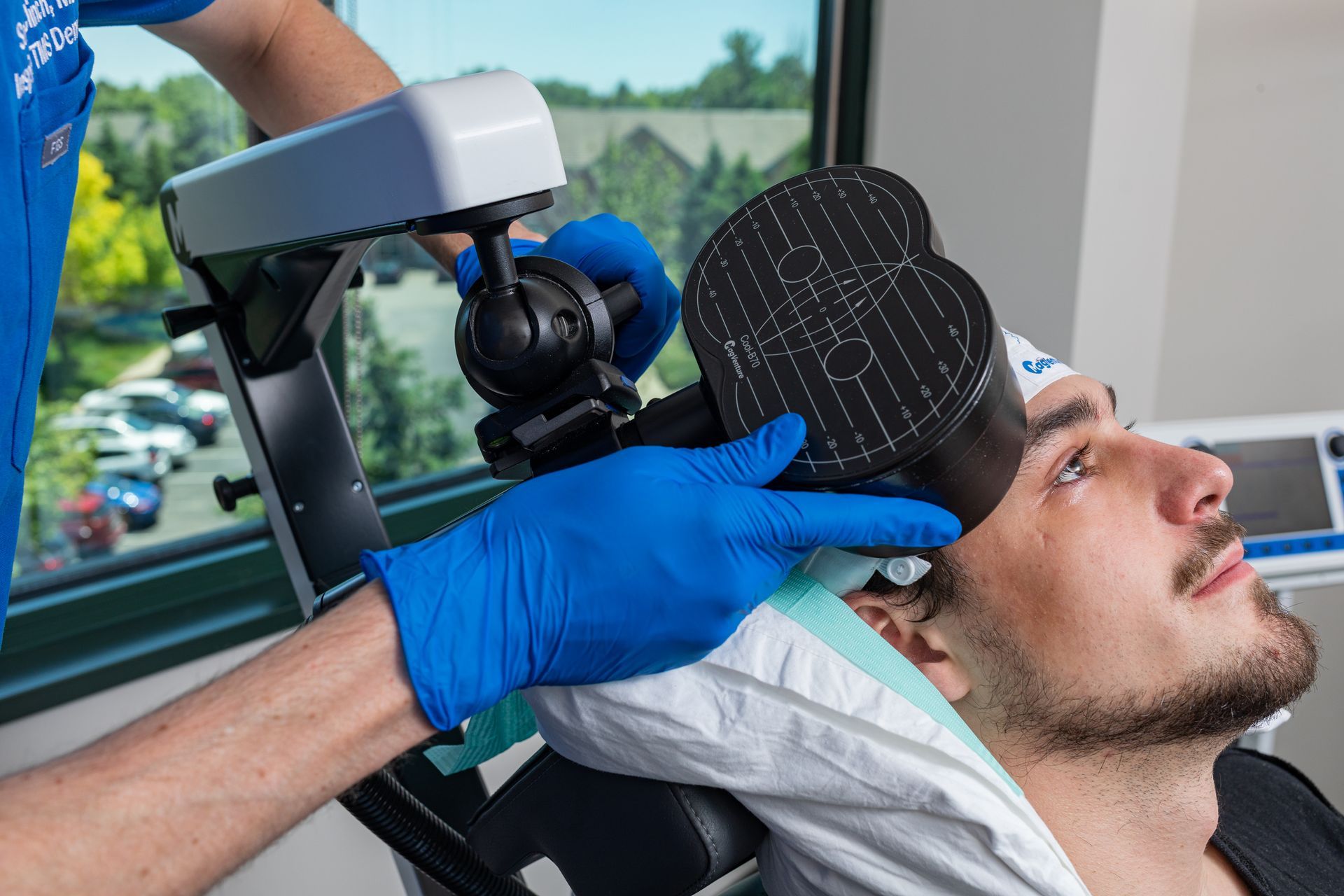
TMS is an excellent option for patients seeking a drug-free, evidence-based treatment - especially when medications have failed. At Inspire TMS Denver, we guide you through every step, from free consultation to insurance coordination and follow-up care.
Not Sure Where to Start?
Take a quick quiz to get answers about your care options, coverage, and costs - in under 2 minutes.
Is TMS Right for Me?
Find out if TMS is a good fit for your symptoms and treatment history.
Quick 9-question screening
No pressure, no commitment
Personalized feedback
TMS Cost Estimator
Curious about your insurance coverage or out-of-pocket costs?
Coverage check
Self-pay pricing options
Sliding scale
Sliding scale
Our shared inspiration is to alleviate mental illness and improve the mental wellbeing of the patients we treat. We respect all backgrounds and cultures and want to hear our patient’s stories to best guide care. During treatment, we reinforce positive wellness practices, help maximize lifestyle modifications, and integrate rTMS therapy into a patient’s overall mental and physical health treatment.
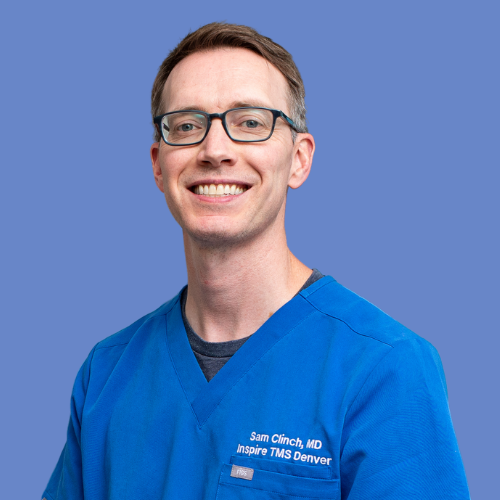
Samuel B. Clinch, M.D
Medical Director

Services & Resources
Us vs Them
What sets Inspire TMS apart from typical TMS providers
Inspire TMS Denver
Sliding Scale Pricing Available
5-day Accelerated TMS Protocol
10–15 min call with Doctor
Focused Exclusively on TMS
>80% Clinic Response Rate
Cost Estimator Tool
15,000+ Treatments Completed
Other Clinics
Fixed Pricing Only
Often Unavailable
Long Wait or Intake Staff Only
Larger Multi-Service Clinics
Unpublished or National Data
No estimator or Guidance
Unknown Volume
Hear What Our Patients are Saying
40+ Five Star Reviews on TMS Therapy In Denver, Colorado
Making TMS Affordable For Everyone
We believe cost should never be a barrier to effective care. That’s why we offer:
Coverage with most major insurance providers
Easy access to third-party financing options
Free 10–15 minute consultation to get started
Why Choose Inspire TMS Denver
We combine clinical expertise with a personalized, patient-first approach. From board-certified care and flexible pricing to proven treatment outcomes, we’re here to help you find lasting relief - with support every step of the way.
Affordability Made Simple
Insurance, Financing & Sliding Scale Options

Board-Certified Psychiatrist
Over 10 Years of Clinical Experience
Fast-Track TMS Option
5-Day Protocol for Faster Relief
Proven Patient Outcomes
Success Rates Tracked In-Clinic
Free Doctor Consultation
No Obligation, 10–15 Minute Intro Call

Personalized Care Plans
Tailored TMS Treatment for Every Patient