


Sliding scale pricing based on income
Talk to the Doctor
Free 10 Minute Consultation
Free Doctor Call
10–15 Minutes
Free Doctor Call →
10–15 Minutes
Free Doctor Call →
10–15 Minutes
Talk to the Doctor
10–15 Minutes
You've tried the meds. You've tried the therapy
The depression treatment you haven't tried yet.
TMS uses magnetic pulses to stimulate the brain circuits involved in depression. It works on the brain, not the bloodstream.
FDA-approved. Drug-free. No downtime.
No sedation. Drive yourself home.
Clear prices, with most insurance covering it.
Free 10-minute call - with the doctor himself.
Our own depression results
85.4%
symptoms at least halved
46.6%
no longer scored as depressed
294
depression patients tracked
15,000+
TMS treatments delivered
Why patients choose US
What makes
Inspire different
1
TMS is the only thing we do.
Not a psychiatry practice with a TMS room in the back. 15,000+ treatments, 300+ patients on a standard course. Nothing else competes for the equipment, the room, or Dr. Clinch's attention.
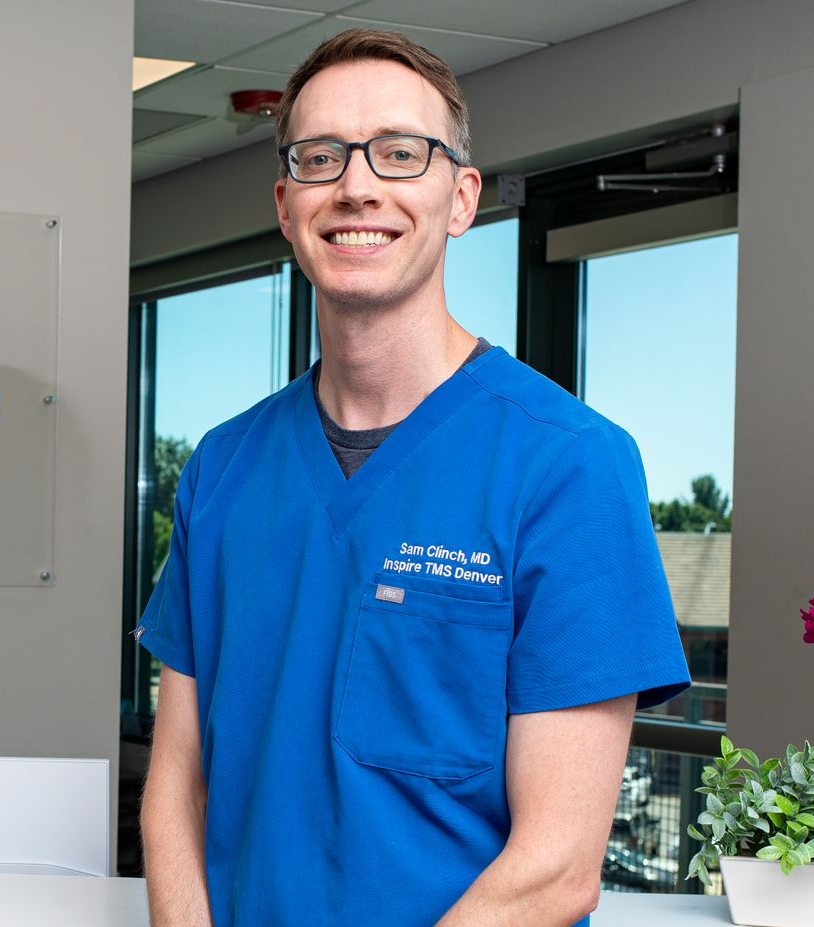
2
You speak to the doctor.
Dr. Clinch takes the first call himself — not an intake coordinator, not a sales team, not a form that lands in a queue. Ten to fifteen minutes, no obligation.
3
Our outcomes are ours.
Every patient is scored on the PHQ-9 throughout treatment. 85.4% responded (n=294). That's counted in this clinic — not lifted from a device manufacturer's study.
The first step
Is TMS right for your depression?
Ten minutes with Dr. Clinch. He'll look at your diagnosis, the antidepressants you've already tried, and your medical history - and tell you honestly whether TMS is a fit. If it isn't, he'll say so.
What actually happens
How TMS treats depression
Magnetic pulses stimulate the underactive brain circuits involved in depression. No drugs, no sedation, no downtime.
1
Free call with the doctor
Ten minutes. History, medications, safety screen. You'll know where you stand.
2
Mapping and a plan
Dr. Clinch personally maps your treatment target — not delegated to a technician.
3
Treatment, tracked
3–20 minutes a session. Stay awake, drive yourself, go back to work. Scored on the PHQ-9 throughout.
A standard course is 36 sessions over 6–8 weeks, five days a week - the course insurance typically covers
What actually happens
What does TMS for depression cost
There are two routes. We'll tell you which one you're on on the call - before you commit to anything.
If you have insurance
Most major plans cover it
Aetna
Cigna
Anthem / BCBS
Medicare
Kaiser
UnitedHealthcare
- We check your plan for you
- We handle the pre-authorisation
- You'll know your cost before you start
Medicaid doesn't cover TMS in Colorado.
If you're paying yourself
From $6,000
- 36 sessions over 6–8 weeks
- Your rate is set by household income — not a sticker price
- Financing available, interest-free for qualified applicants
Find your exact number below. No phone call needed.
View sliding scale rates by income
Prices reduce significantly based on household income — click to see the full breakdown
| Household income | Standard prepay | Standard PAYG | Accelerated 5-day |
|---|
ONE-D is a flat rate of $3,500 regardless of income bracket. Custom arrangements available — just ask.
Book a free consultation to discuss your options →The question we get most
Why don't we use a "deep" coil
A wider pulse stimulates more of your brain than needs stimulating. That's not extra benefit - it's extra side effects. We aim at one spot, on purpose. You'll still see Deep TMS advertised with big numbers. They come from a study the manufacturer paid for, scored on a test they chose themselves. Here is that same study, scored the standard way, next to our own patients.
Share of patients whose depression symptoms at least halved
100%
75%
50%
25%
0.0%
0.0%
0.0%
Deep TMS
as advertised
Their own study, scored on a different test
Deep TMS
on the PHQ-9
The same study, standard scoring
Inspire TMS Denver
MagVenture · on the PHQ-9
294 people we treated ourselves
14 more people in every 100. The PHQ-9 is nine questions you fill in yourself - the standard way depression is scored.
Us vs Them
What sets Inspire TMS apart from typical TMS providers
Inspire TMS Denver
Focused Exclusively on TMS
10–15 min call with Doctor
Sliding Scale Pricing Available
85.4% response rate
15,000+ Treatments Completed
Other Clinics
Fixed Pricing Only
Often Unavailable
Long Wait or Intake Staff Only
Larger Multi-Service Clinics
Unpublished or National Data
Unknown Volume
Frequently Asked Questions
What will it actually cost me?
Insured: most major plans cover standard TMS. We check your benefits and tell you your number before you start. Self-pay: from $6,000, with sliding-scale rates by household income and financing available.
What if I don’t have insurance?
We offer several ways to make TMS accessible without insurance:

Third-party financing options (6–14 month plans)
Free 10–15 minute consultation to walk through your options
How long is each session?
A typical session lasts 3 to 18.5 minutes. You can drive yourself to and from appointments and return to your day right after.
Will it work if antidepressants didn't?
That's exactly the situation TMS was approved for. Of our own 294 depression patients, 85.4% at least halved their symptoms and 46.6% no longer scored as depressed at all. It doesn't work for everyone, and Dr. Clinch will give you a realistic picture on the call.
How soon will I feel better?
Some patients begin to notice improvement within the first 2–3 weeks, while others respond later in the course. We track your progress throughout treatment to adjust your care as needed.
Are there side effects?
TMS is well tolerated. The most common side effect is mild scalp discomfort or headache after the session, which typically fades with time.
Who treats me?
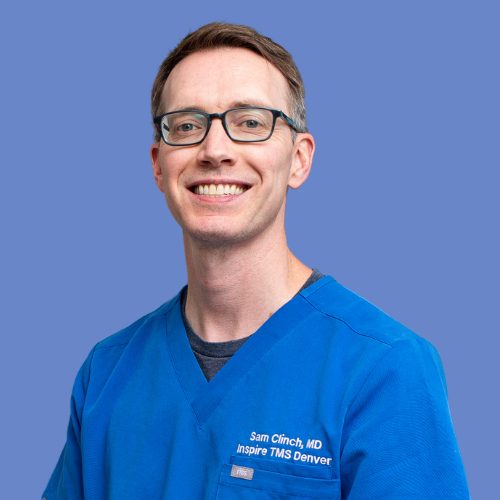
Dr. Samuel Clinch - board-certified psychiatrist, TMS fellowship at Duke, 10+ years in the field, founder of the clinic.
What if I can't commit to six weeks?
Say so on the call. Shorter protocols exist, and Dr. Clinch will tell you honestly whether one is appropriate for you - including where the evidence is still early.
Where are you?
340 East 1st Avenue, Suite 333, Broomfield, CO 80020. Mon–Fri, 8am–5pm.
Hear What Our Patients are Saying
40+ Five Star Reviews on TMS Therapy In Denver, Colorado
Take the first step out of depression
Start with the 90-second check - no obligation.